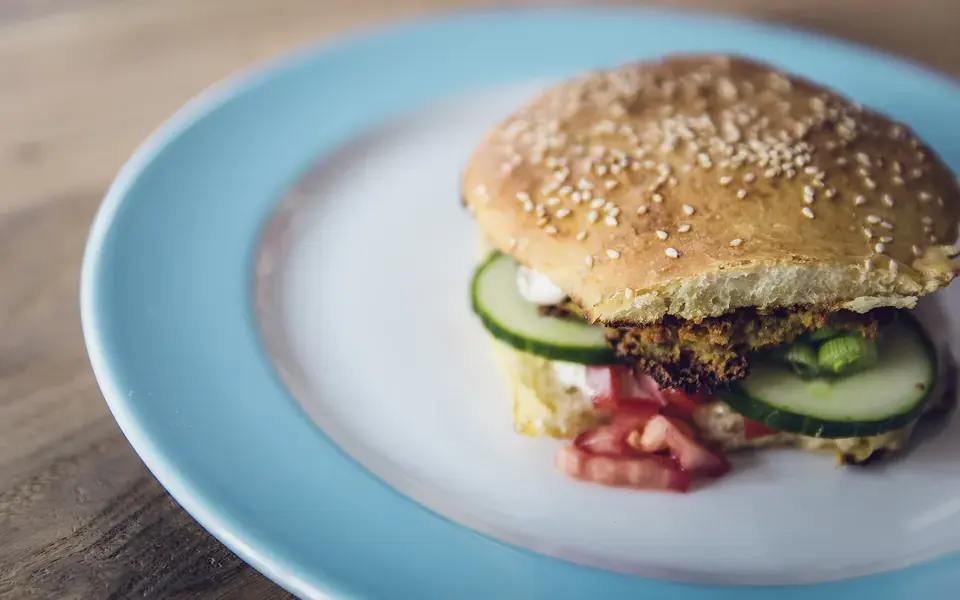
Smoky black bean burger
Charred at the edges, soft in the middle, with pickled beetroot and a lot of black pepper.
Under a tenth of the land of beef burger.
For chefs, caterers and procurement
The rest of this site argues with individuals, which the evidence says is a weak lever. The strongest field results are about what is on the menu and what it is called. That is your decision, not theirs, so this page is the evidence pointed at you.
We are honest elsewhere on this site that telling people facts is a poor way to change what they eat. People act and then construct reasons, and food is habit, price, convenience and company long before it is an argument. A site that only argues is aiming at the weakest lever available.
What the field evidence does support is duller and more useful: people choose from what is in front of them. Change the menu and the orders change, mostly without anyone noticing. That is your lever, not ours, so everything below is sourced, rated, and includes the trials that found nothing.
Yes, in canteen settings. Doubling vegetarian availability raised vegetarian sales by roughly 8 to 15 percentage points, and almost nobody noticed the change.
In a study of 94,644 meals across university cafeterias, raising the share of vegetarian options from a quarter to a half raised vegetarian sales by about 15 percentage points observationally and 7.8 points in the experimental arm.
A French replication found the odds of a vegetarian choice rose about 2.6 times, with slightly higher satisfaction, and only about 6% of diners noticed anything had changed.
The mechanism is not persuasion. It is that people choose from what is in front of them, and most of them are not making a considered decision at all.
Where it might not hold.
The full claim record · Does adding a second vegetarian option change what people order?
Yes. Identically prepared vegetables were chosen 41% more often under a flavour label than a health-restrictive one, and 'meat-free' performed worse than almost every alternative tested.
Stanford dining-hall trials served the same vegetables under different labels. Flavour-focused labels beat health-restrictive ones by 41% and basic ones by about 25%.
The Better Buying Lab found 'meat-free' underperformed nearly every alternative name. Describing a dish by what is missing invites loss aversion and makes the taste harder to imagine.
The same effect runs the other way: people rated an identical mango lassi as markedly less enjoyable when it was labelled healthy.
The same dish, badly named
Vegan burger
Names the category and the absence. Nothing here tells you how it tastes.
The same dish, named for itself
Smoky black bean burger
Charred at the edges, soft in the middle, with pickled beetroot and a lot of black pepper.
Where it might not hold.
Every dish on this site is named this way, and each carries the difference it makes against what it stands in for.
Charred at the edges, soft in the middle, with pickled beetroot and a lot of black pepper.
Under a tenth of the land of beef burger.
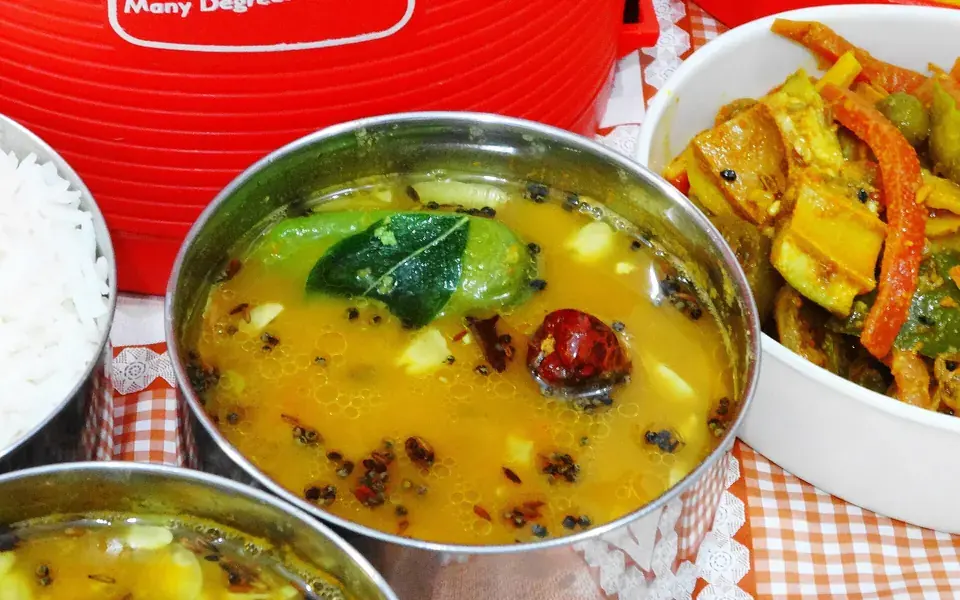
Soft split lentils finished with cumin seeds fried in oil until they crackle, poured over the top.
About 1.5 times the land of chicken curry.
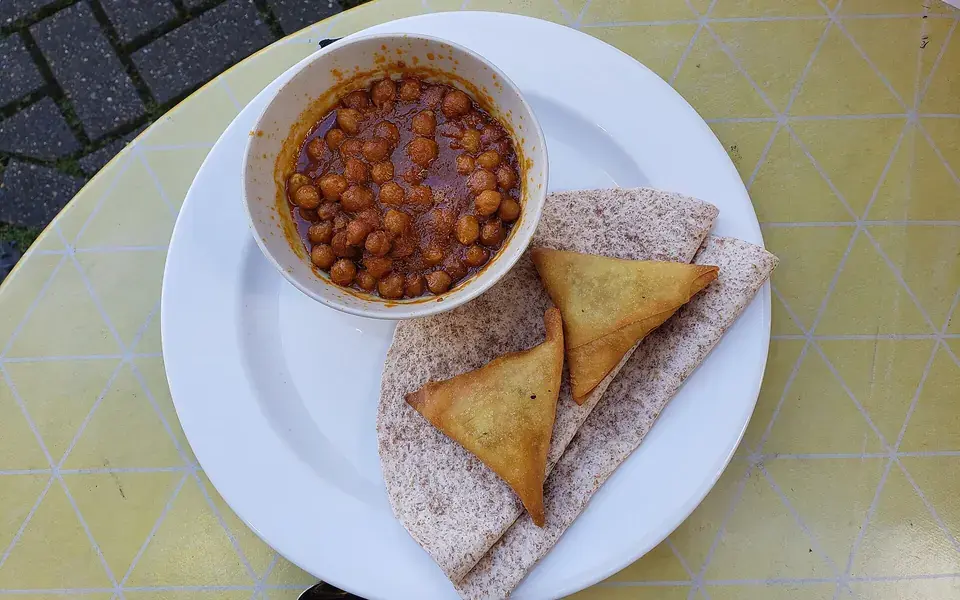
Chickpeas in a dark, sour-sweet tomato sauce, sharpened with a squeeze of lemon at the end.
About 1.7 times the land of chicken curry.
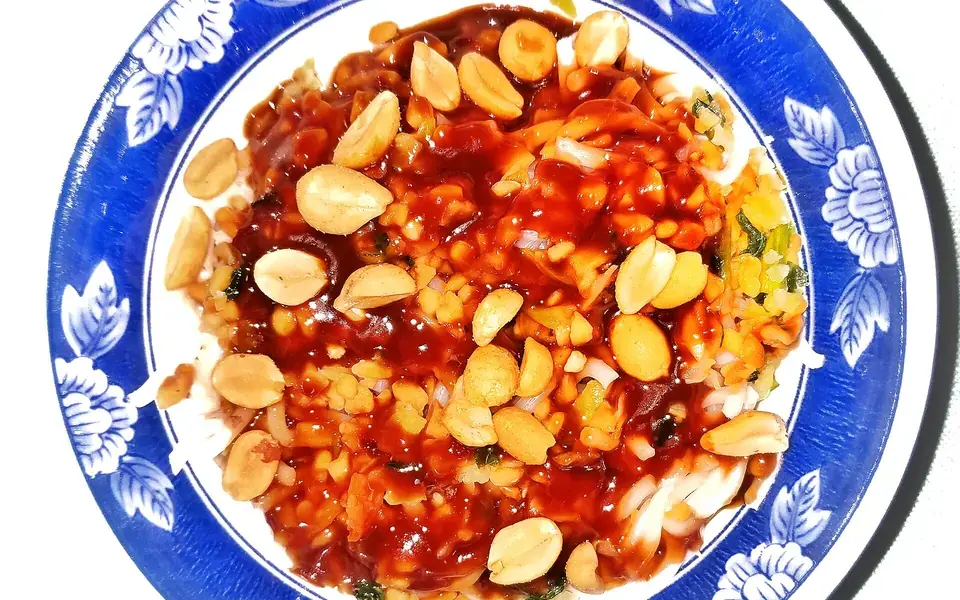
Twenty minutes, one pan, and a sauce of peanut butter, soy and chilli that clings to everything.
About half of the land of chicken noodles.
This is where we have to be careful, because the honest answer is that we do not know. Making the plant option the default, or moving it up the list, is widely recommended and thinly evidenced.
Nykänen and colleagues tested dish-of-the-day and menu-sequence changes in a university restaurant and found nothing: no change in which main dish was chosen, and no change in the weight of meat served. That is a clean null result in exactly the setting where availability worked.
So the two are not interchangeable. Availability has field evidence from two countries behind it. Sequence does not. If you only have the appetite for one change, make it the share of the menu, not the order of it.
Each of these is generated from the same records this page renders, in three formats, so nothing can drift between the version on the wall and the version on the screen.
Menu naming checklist
The naming rules the evidence supports, the figures behind each one, and what naming will not do.
Dish cards
Every dish on this site with a line you could put on a menu, and what it stands in for.
One-page evidence summary
Both claims with their strength ratings, limitations and every source, for the person who has to sign it off.
Chefs and head chefs, contract caterers, procurement teams, student unions, workplace catering, hospitals and schools. Anyone who decides what the options are rather than choosing between them.
If you run one of these and want to talk about what you are considering, or you have data from a change you made and would let us record it, get in touch through the about page. Results that went nowhere are as useful to us as results that worked.
Emma S. Garnett, Andrew Balmford, Chris Sandbrook et al. (2019). Proceedings of the National Academy of Sciences.
(2023). French university catering research group.
(2022). University research group.
Bradley P. Turnwald, Alia J. Crum (2019). Psychological Science.
(2020). World Resources Institute, Better Buying Lab.